
Media Training: The Basics Every Spokesperson Should Know
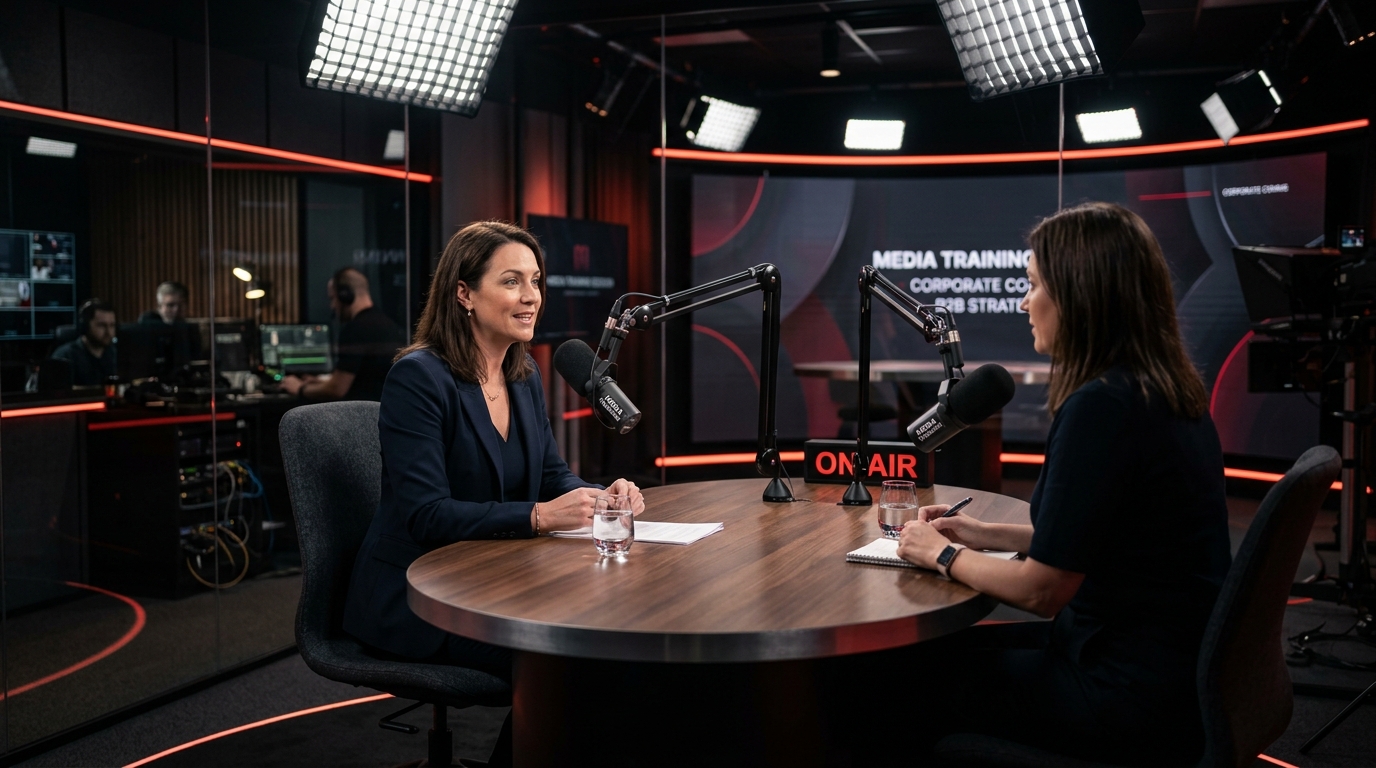
Speaking to the media can be a valuable opportunity for any organisation. A well-handled interview can raise profile, build credibility and help communicate important messages to customers, investors and other stakeholders.
But media interviews are not the same as normal business conversations.
Journalists are looking for stories, not presentations. They want clear answers, relevant information and comments that will interest their audience. They may also ask questions you were not expecting or take the interview in a different direction.
That is why media training matters.
What is media training?
Media training prepares executives, senior managers and company spokespeople to communicate effectively with journalists across print, online, television, radio and podcast interviews.
It helps participants understand how journalists work, how interviews are structured and how to communicate clearly when representing their organisation.
What are the important elements of media training?
A good foundational media training course should address the main situations a spokesperson is likely to encounter, including:
- Understanding how journalists and newsrooms work
- Understanding what makes a story newsworthy
- Preparing for a media interview
- Developing clear key messages
- Answering journalists' questions effectively
- Handling difficult or unexpected questions
- Avoiding jargon and overly technical answers
- Keeping answers concise and relevant
- Communicating complex subjects simply
- Preparing for print and online media interviews
- Preparing for television interviews
- Preparing for radio and podcast interviews
- Understanding the difference between live and recorded interviews
- Building confidence when speaking to journalists
- Recognising common media interview mistakes
- Protecting corporate reputation during an interview
- Preparing company executives to act as media spokespeople
- Practising interviews before speaking to a real journalist
These are the foundations on which effective media interview skills are built.
What makes something newsworthy?
One of the first things to understand is that journalists look at information differently from companies.
A business may be particularly proud of a new product, service or corporate development, but that does not automatically make it a strong media story.
Journalists are generally looking for something that is new, significant, relevant or interesting to their audience. Stories may involve change, controversy, new research, major investment, an emerging industry issue or a strong human angle.
Understanding what makes a story newsworthy helps spokespeople recognise what the journalist is interested in and why certain questions are being asked.
Know what you want to say
Before an interview, it is important to think about what you actually want the audience to remember.
Many executives know their subject extremely well but try to communicate too much information. The result can be long answers in which the important point gets lost.
Good preparation helps a spokesperson identify the most important messages and communicate them clearly without sounding scripted.
Expect the unexpected
Most journalists are simply trying to obtain the information they need to produce a good story. That does not mean every question will be easy.
A journalist may ask about competitors, company performance, pricing, regulation, problems within the industry or an issue that has recently appeared in the news.
Even experienced executives can find themselves giving an answer they later wish they had handled differently.
Media training provides an opportunity to prepare for these situations before they happen.
Different interviews require different approaches
An interview with a trade journalist may be detailed and technical. A television interview may require much shorter answers. Radio and podcasts place greater emphasis on how a spokesperson sounds, while online journalists may require additional images, video, data or supporting information.
Understanding these differences helps executives prepare for the particular type of interview they are about to undertake.
Why companies invest in media training
The purpose of media training is not to turn executives into professional broadcasters.
It is to make sure that people representing the organisation understand what is expected of them when a journalist calls.
Good preparation can help executives communicate more clearly, feel more confident in an interview and avoid mistakes that could distract from the organisation's intended message.
It is also considerably better to practise answering challenging questions in a training environment than for the first time during a live interview.
BCM Foundational Media Training Course
BCM's Foundational Media Training Course is designed for executives, managers and company spokespeople who need a practical introduction to dealing with journalists and media interviews.
The course provides participants with a grounding in how the media works, how to prepare for an interview and how to communicate effectively across different types of media.
It provides the foundation participants need before moving on to more advanced interview techniques and practical media interview training.
If members of your management team are likely to speak to journalists, the best time to prepare them is before the interview request arrives.
Find out more about BCM's Foundational Media Training Course.