
Why AI search is changing the value of earned media
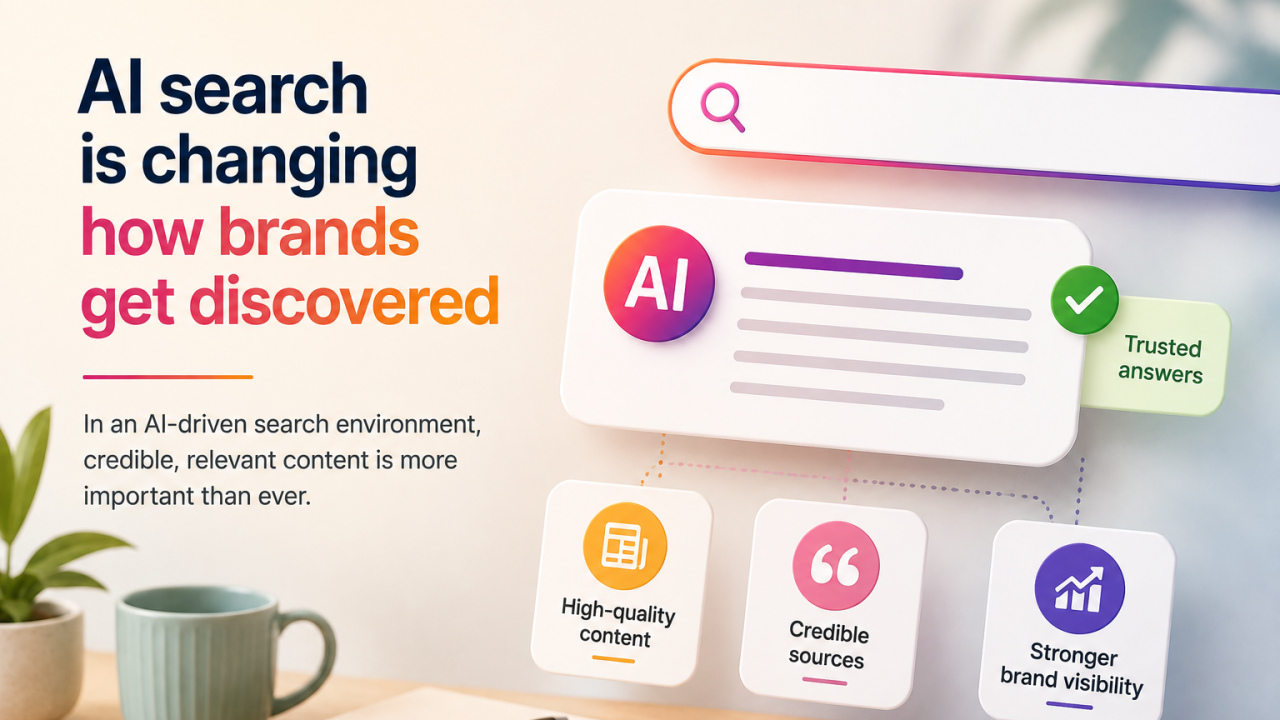
More people are turning to AI tools such as ChatGPT, Perplexity and Google AI for answers instead of starting with a traditional Google search. The shift may seem subtle, but it changes something fundamental for brands.
In a conventional search journey, users are presented with a list of links and decide which sources to explore. In an AI search journey, they often receive a direct answer. That answer can shape how people understand a company, product category or industry trend before they ever visit a brand's website.
For communications teams, this raises an important question: if AI is increasingly influencing brand discovery, what sources are shaping those answers?
Earned media becomes more valuable here. PR has always helped brands build trust through credible third-party visibility. In an AI driven search environment, that credibility may play an even greater role. One of the strongest signals comes from Gartner’s Top Predictions to Inform 2026 Comms Strategies, which suggests that PR and earned media budgets could roughly double by 2027 as public AI platforms become an alternative to traditional search. It points to a broader reassessment of how earned media supports brands confidence and reputation.
From search rankings to AI answers
For years, online visibility has been tied to search engine optimisation. Brands invested heavily in websites, keywords, backlinks and paid search to improve rankings.
AI search changes the challenge. It's no longer just about whether a brand can be found, it's about whether it's understood correctly, associated with the right topics and included in relevant answers.
This is exactly where PR has an advantage. AI isn't just looking at what brands say about themselves, it increasingly draws on independent sources that have already earned trust.
PR teams cannot control what AI explanations say, but they can influence the quality and consistency of the information available about a brand.
Why earned media matters more
The evolving landscape also reinforces the strategic importance of earned media. AI cites non-paid sources far more frequently than paid ones, and earned media is a significant part of that ecosystem. The Gartner research says 95% of the links presented by AI comes from non-paid sources, with 27% of those citations originate from earned media coverage.
Paid campaigns drive reach, and owned content communicates a company's perspective, but earned media offers something different: credibility. Coverage in trade publications, expert interviews and independent news outlets helps establish a brand as part of the trusted information layer around a topic.
Previously, this influenced customers, investors and journalists. Increasingly, it may also influence how AI tools describe a brand in response to a question. Media coverage is no longer just a campaign output but it's part of a long-term visibility strategy.
Whether PR budgets actually double isn't really the main point. The more significant shift is that earned media is no longer only influencing human audiences, it is increasingly helping shape the information AI uses to reply to those questions.
Where AEO fits in
Gartner frames this change through the lens of Answer Engine Optimisation, or AEO. As more people rely on AI generated answers, AEO is increasingly becoming part of PR conversations. If SEO helps websites rank in search results, AEO helps brands appear in the responses AI provide.
It's useful to distinguish AEO from Generative Engine Optimisation (GEO). GEO focuses on making owned content easier for AI systems to interpret, while AEO focuses on whether a brand is selected, cited or mentioned when users ask questions.
For PR teams, AEO isn't an entirely new discipline. It builds on the work communications professionals already do: shaping narratives, securing coverage, amplifying expert voices and ensuring the brand is associated with the topics it wants to own.
The difference is that this work now supports a new type of visibility, one in which brands are not only seen by audiences but also reflected in AI driven discovery.
A simple AI visibility test
To understand what AI answers are already saying about your brand, try the following experiment:
1. Ask a broad question: Who are the leading companies in [your industry]?
2. Check whether your brand appears. If it doesn't, there may be a visibility gap.
3. Ask a direct question: What is [brand name] known for?
4. Assess whether the answer is accurate, current and aligned with your messaging.
5. Review the sources behind the response. Are they trade publications, news articles, company websites or competitor content?
It isn't a complete measurement framework, but it offers a useful starting point. If a brand is absent from broader industry conversations, it may need stronger category visibility. If the insights are outdated or off-message, the issue may be narrative clarity rather than awareness.
Both are areas where PR can make a meaningful difference.
What communications teams should do next
The key takeaway isn't that every brand needs to chase AI citations immediately. It's that search behaviour is changing, and communications teams need to understand how earned credibility fits into that.
As more people use AI to compare suppliers, understand industries and form opinions, the sources behind those answers will matter. Brands with a strong presence across credible third-party channels are likely to be better positioned than those relying solely on owned or paid content.
For PR teams, it creates an opportunity. Earned media is no longer just about being seen but it's about ensuring a brand is understood in the right context, by the right audiences and through the sources that influence trust.
The next step is to start treating AI visibility as part of the broader PR conversation: where the brand appears, what it is known for and whether that aligns with the position the brand wants to own.