
South Africa’s Energy Challenge Beyond Elections
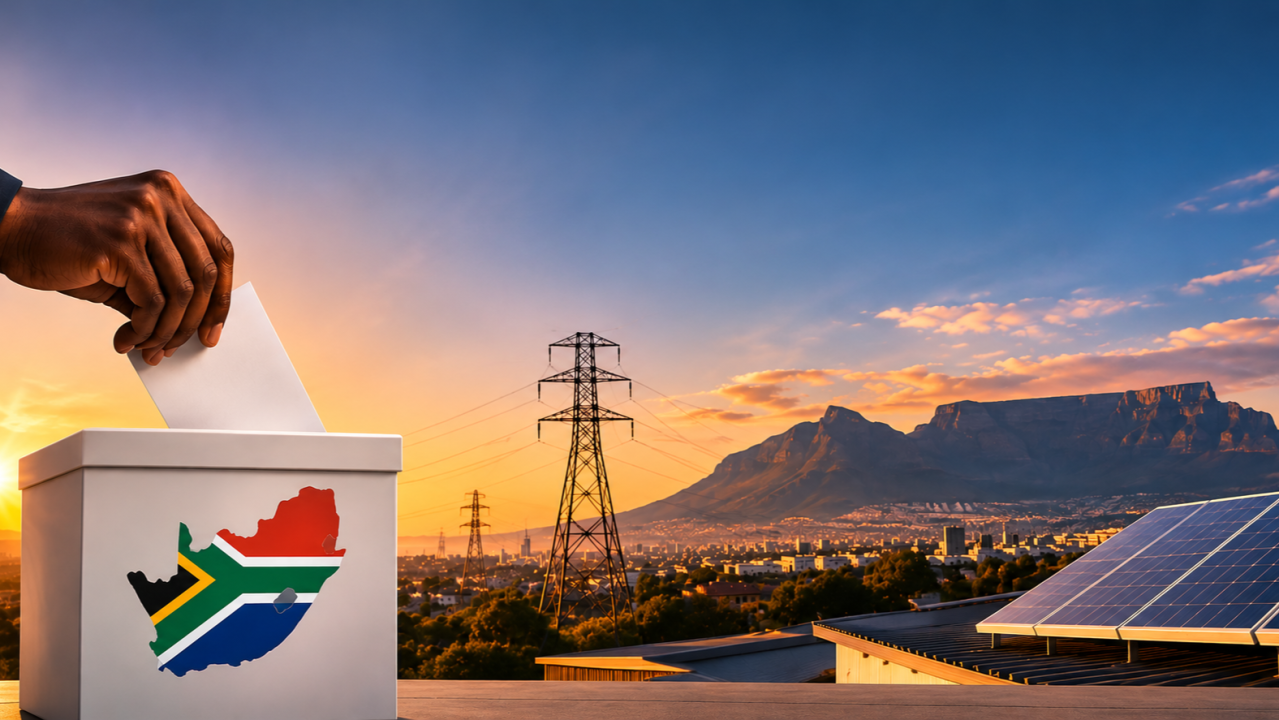
As South Africans head to the polls, electricity reliability and infrastructure investment remain important issues in the conversation around local government and service delivery.
While political parties share the broad objective of improving access to reliable electricity, their approaches to achieving this differ. So, what do these differences mean for South Africa’s energy future?
Different parties, different priorities
The African National Congress (ANC) has focused on strengthening electricity infrastructure and improving municipal service delivery, alongside broader reforms to South Africa’s energy sector. Its commitments can be explored in its election manifesto.
The Democratic Alliance (DA) has placed emphasis on giving municipalities greater flexibility to purchase and sell electricity, supporting independent power producers and reinvesting electricity revenue into municipal infrastructure. These priorities are outlined in its 2026 Local Government Election Manifesto.
The Economic Freedom Fighters (EFF) have emphasised public ownership of electricity infrastructure and a stronger role for the state in delivering essential services. This reflects the party’s broader approach to public infrastructure, affordability and economic development, as outlined in its 2026 Local Government Election Manifesto.
In short, the ANC is focusing on improving existing electricity infrastructure and service delivery, the DA is advocating greater energy independence and private-sector participation, while the EFF is prioritising public ownership and affordable electricity. Although their approaches differ, all three ultimately aim to address South Africa’s electricity challenges.
The challenge extends beyond electricity generation
South Africa’s electricity challenges are not limited to generating sufficient power. Municipalities also have responsibility for maintaining electricity distribution infrastructure, managing local networks and ensuring that electricity reaches households and businesses. This makes municipal governance particularly important.
According to the Auditor-General of South Africa, financial management, infrastructure maintenance and service delivery remain significant challenges across local government. These issues cannot be resolved through energy policy alone. They require sustained investment, effective management and long-term planning.
Looking beyond the election cycle
Political leadership may change every five years, but electricity infrastructure must continue serving communities and businesses long after an election.
Whether the preferred approach involves greater private-sector participation, stronger public ownership or improved municipal management, the ultimate measure of success should be the same: reliable, affordable and sustainable electricity.
As South Africa looks towards its next chapter of local government, perhaps the most important question isn’t simply which party has the most ambitious energy proposals. It’s which commitments can realistically be implemented, funded and maintained.