
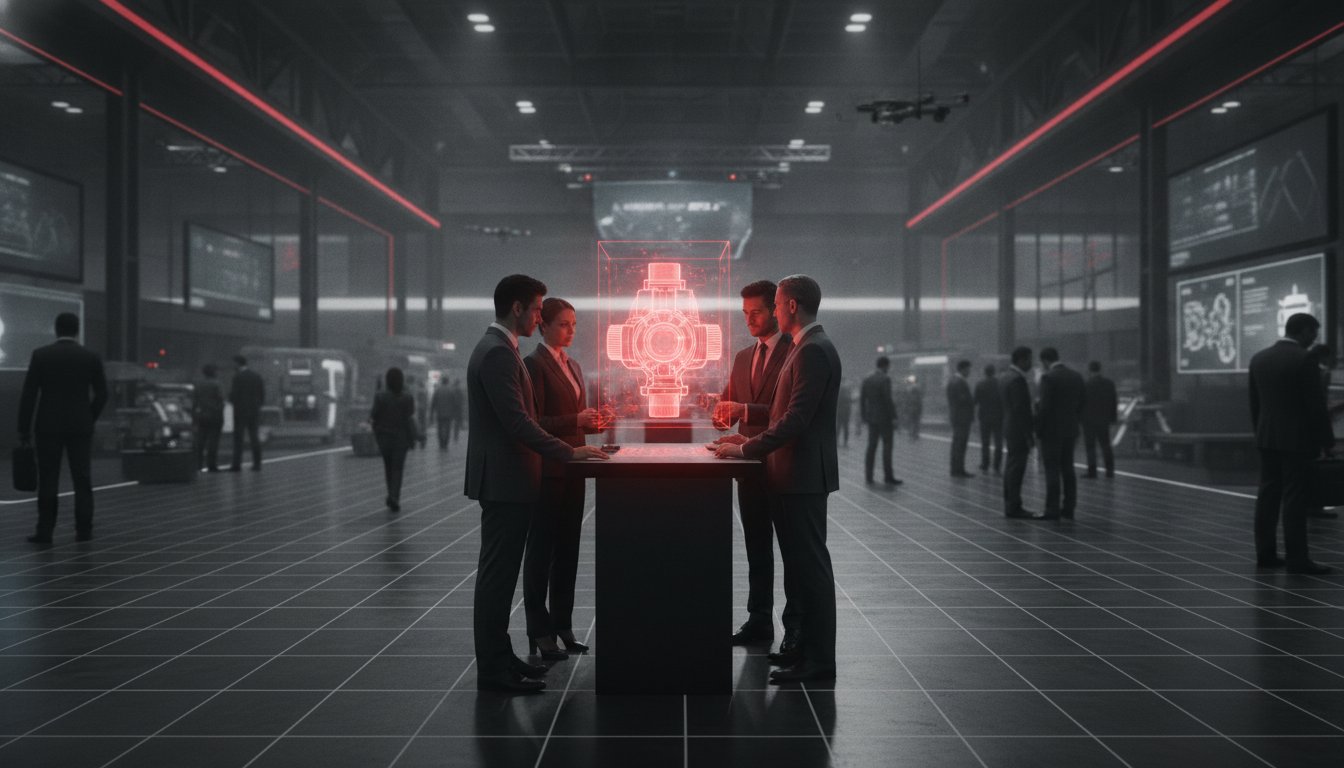
Did you know that whilst 81 per cent of attendees at your next exhibition will hold direct buying authority, the average industrial firm still treats their presence as a sunk cost rather than a strategic asset? It's a frustrating reality for many technical directors who see high exhibition costs fail to deliver a measurable ROI. If you've ever felt your brand is invisible amongst a sea of technical competitors or struggled with post-event lead stagnation, you aren't alone. Effective trade show marketing requires more than just a well-designed booth; it demands a sophisticated approach to communication and engagement.
This guide provides the strategic framework you need to transform complex technical exhibitions into high-value lead generation and brand authority engines. You'll learn how to master every phase of the event lifecycle, from initial planning to long-term follow-up. We'll outline a clear roadmap for pre, during, and post-show activity, demonstrating how the integration of PR and media relations can elevate your standing amongst industry peers and technical journalists. By the end of this article, you'll have the tools to ensure your next international show delivers the commercial impact your engineering excellence deserves.
Key Takeaways
- Learn how to transition from passive attendance to a results-driven strategy whilst integrating trade show marketing into your long-term B2B sales objectives.
- Master the three-phase framework that prioritises pre-show PR and media relations to secure high-value appointments before the event even begins.
- Recognise why technical industrial buyers favour engineering rigor and data-backed narratives over superficial booth design and flashy aesthetics.
- Establish a methodical approach to post-show follow-up that prevents lead stagnation amongst your target audience and ensures your value proposition reaches key decision-makers.
- Move beyond basic lead counts to calculate the total value of your exhibition, including brand authority gains and strategic media coverage.
Table of Contents
- Strategic Trade Show Marketing: The B2B Industrial Imperative
- The Three-Phase Framework for High-Impact Trade Show Marketing
- Technical Authority vs. Superficial Visibility: Choosing Your Strategy
- Leveraging Media Relations and PR Within the Trade Show Environment
- Measuring ROI and Sustaining Momentum Post-Exhibition
Strategic Trade Show Marketing: The B2B Industrial Imperative
Trade show marketing in the B2B industrial sector is the deliberate orchestration of technical brand narratives and professional relationships across a multi-channel event lifecycle to accelerate high-value procurement cycles. For many, understanding what is a trade show has evolved from viewing it as a simple physical gathering to recognising it as a high-stakes arena for corporate reputation management. Industrial firms must shift from merely attending to strategically marketing their presence; the former is a passive expense, whilst the latter is a proactive investment in market positioning.
Strategic confidence in this space is built through consistency and technical rigor. In 2026, the industrial landscape demands that your exhibition strategy integrates digital marketing and SEO efforts to capture interest before the hall doors even open. It isn't enough to rely on random footfall. You must curate a narrative that resonates with the specific logic and strategic needs of corporate entities. This approach ensures your brand isn't just another logo in a directory, but a recognised authority that stakeholders actively seek out. By aligning event goals with broader corporate reputation management, you transform a three-day event into a year-long engine for growth.
The Evolution of Industrial Exhibitions
The days of static, uninspired displays have passed. Modern exhibitions have transformed into interactive technical hubs where professional stakeholders demand high-value technical insights rather than generic sales pitches. In the industrial sector, engagement now relies on demonstrating complex problem-solving capabilities. Engineering firms are increasingly adopting hybrid engagement models, using digital twins and augmented reality to bridge the gap between physical hardware and technical data. This shift reflects a more sophisticated audience that values evidence over artifice.
Defining ROI in Technical B2B Markets
Calculating the success of an event requires moving beyond simple lead counts to measure strategic influence and brand sentiment. In engineering, the true value often lies in the face-to-face interactions that solidify long-term partnerships. Trade shows act as a critical catalyst for the entire B2B sales funnel, providing a concentrated environment to build trust with decision-makers who are often inaccessible through digital channels alone. A successful strategy identifies how these professional encounters shorten the sales cycle and enhance the company's standing amongst industry peers and technical journalists. This method turns a high-stakes exhibition into a measurable component of your professional communications strategy, ensuring every pound spent contributes to a lasting market presence.
The Three-Phase Framework for High-Impact Trade Show Marketing
Successful industrial trade show marketing isn't a three-day sprint; it's a structured, three-phase marathon that begins months before the stand is even built. Whilst many firms focus solely on the physical booth, the strategic specialist recognises that the value of trade shows is realised through meticulous preparation and sustained follow-through. A well-executed timeline ensures that every technical detail is leveraged to build authority and every interaction is captured to drive future revenue. This methodical approach transforms a temporary exhibition into a permanent pillar of your corporate reputation.
Phase 1: Pre-Show Anticipation and Outreach
The pre-show phase is often the most neglected, yet it's vital for ensuring your stand isn't an island in a crowded hall. Securing pre-show editorial mentions in trade journals such as Manufacturing Monthly establishes your presence before the event begins. You should organise targeted invitations for key industry analysts and technical journalists, offering them exclusive data or early access to product specialists. Developing a robust content calendar that builds momentum through technical white papers and social teasers ensures your target audience arrives with a clear intent to engage with your brand.
Phase 2: On-Site Execution and Engagement
Execution on the floor requires a delicate balance between executive presence and granular technical accuracy. Managing a media centre effectively involves facilitating interviews that translate complex engineering concepts into persuasive professional stories. Use technical demonstrations to anchor your thought leadership presentations, providing tangible proof of concept for your claims. Simultaneously, your team should capture high-quality video and photography for immediate social media amplification. This allows you to reach stakeholders who couldn't attend in person, ensuring your on-site efforts have a global reach.
Phase 3: Post-Show Momentum and Nurturing
The transition from lead capture to sustained editorial coverage is where long-term value is solidified. Turning event discussions into authoritative technical copywriting, such as detailed white papers or industry reports, keeps your brand at the centre of the conversation. You must execute a structured follow-up programme that respects the extended B2B buying cycle, moving away from aggressive sales pitches toward continued technical consultation. Finally, analysing media reach and sentiment provides the strategic insights necessary for a comprehensive ROI report. If you're looking to refine your next event strategy, you can discuss your requirements with our exhibition specialists.
Technical Authority vs. Superficial Visibility: Choosing Your Strategy
In the high-stakes environment of a global exhibition, the temptation to prioritise a "flashy booth" over technical substance is a common pitfall. However, for companies operating in the industrial sector, superficial visibility rarely translates into long-term commercial success. Technical buyers and procurement leads prioritise data over design; they're searching for rigorous engineering evidence rather than mere aesthetic charm. Effective trade show marketing hinges on your ability to present as a sophisticated solution provider rather than a mere vendor. This psychological distinction is critical. A vendor simply sells a product, but a partner solves a complex operational challenge.
There's a significant risk in over-simplifying complex engineering concepts for the sake of broad engagement. Whilst a catchy slogan might draw a temporary crowd, it often alienates the very decision-makers who possess the authority to sign off on major contracts. If your message lacks technical depth, you risk appearing lightweight in a market that demands precision and reliability. Your strategy should focus on clarity without sacrificing the intricate details that prove your engineering capability.
The Role of Thought Leadership at Exhibitions
Positioning your engineers as industry experts through seminar speaking slots is a powerful way to command authority on the floor. Instead of a standard sales pitch, these sessions should focus on solving specific sector pain points, such as efficiency bottlenecks or regulatory compliance. This approach ensures your team is seen as a group of Strategic Specialists who understand the nuances of the global professional landscape.
- Technical Seminars: Lead the conversation by presenting original research or peer-reviewed case studies.
- White Paper Distribution: Provide tangible, data-heavy documents that solve specific engineering challenges.
- Expert Consultations: Offer one-to-one sessions with your lead designers to discuss bespoke applications.
For skeptical B2B decision-makers, this authoritative content acts as a necessary bridge, building trust through demonstrated expertise rather than traditional marketing hype.
Experiential Marketing for the Engineering Mind
Experiential marketing for the industrial world must move from "pretty" displays to "functional" interactive demos. A display should be a tool for deeper understanding, not just a visual backdrop. Using augmented reality (AR) to showcase large-scale industrial machinery allows prospects to explore internal components or maintenance cycles that are impossible to demonstrate on a physical hall floor. Every experience must reinforce a core technical value proposition. If an interactive element doesn't help a stakeholder understand your specific engineering advantage, it's merely a distraction. Precision in execution ensures your brand is remembered for its capability, establishing a lasting presence amongst industry peers and technical journalists.
Leveraging Media Relations and PR Within the Trade Show Environment
Earned media coverage at an industrial event acts as a powerful third-party endorsement that significantly accelerates the trust-building process for buyers navigating complex procurement cycles. In the competitive arena of an international hall, effective trade show marketing must move beyond booth graphics to encompass a rigorous PR strategy. A "media-ready" presence requires proactive planning; you don't leave your reputation to chance. It's vital to ensure your brand is the first point of contact for journalists seeking technical expertise. This involves identifying key media targets months in advance and aligning your announcements with current editorial trends in sectors like automation or energy.
Before the show begins, executive media training is essential to ensure your spokespeople can deliver precise, data-backed answers under the pressure of a live environment. When pitching "breaking news" from the floor, the narrative must be framed as a solution to a wider industry challenge to capture the interest of global trade publications. Journalists aren't looking for a brochure; they want a story that demonstrates how your engineering innovation impacts the market. By positioning your executives as Strategic Specialists, you secure the kind of editorial authority that paid advertising simply cannot buy.
Building the Press Kit for 2026
In 2026, the traditional paper press pack is obsolete. A sophisticated digital-first approach allows journalists to access technical releases, high-resolution imagery, and executive biographies via secure QR codes placed strategically around your stand. Every technical claim must be backed by verifiable data, as industrial journalists will scrutinise the engineering logic behind your announcements. Providing a clear, well-structured digital repository ensures that your story is accurate and easy to publish, even when reporters are working under tight deadlines on the show floor. This level of professional preparation reflects your commitment to reliability and technical rigor.
Managing On-Site Media Interviews
Managing interviews requires bridging the gap between intricate technical jargon and a compelling brand narrative. Executives should be briefed to handle high-stakes interactions with industry analysts, ensuring they remain focused on the strategic value proposition rather than getting lost in minutiae. Preparation must also include handling difficult questions or potential crisis scenarios that can arise in a live setting. A steady, capable presence in the face of scrutiny reinforces your image as a trustworthy partner in a demanding global landscape. To ensure your next exhibition achieves maximum editorial impact, you can engage our strategic media specialists to manage your event communications.
Measuring ROI and Sustaining Momentum Post-Exhibition
Calculating ROI in the complex industrial sector requires a fundamental shift from counting immediate leads to evaluating the "Total Value of Exhibition" (TVE). Whilst many generic approaches focus on superficial metrics like booth scans, a strategic specialist understands that B2B sales cycles often span 12 to 18 months. Trade show marketing success is defined by how effectively these initial encounters are translated into long-term strategic insights. By integrating granular exhibition data directly into your CRM, you ensure that the technical nuances captured during floor conversations fuel a sophisticated, multi-year nurturing programme. This methodical approach prevents post-event lead stagnation and ensures your value proposition remains at the centre of the buyer's logic.
The moment the exhibition hall closes should be viewed as the official launch of a multi-channel technical PR campaign. This is where BCM Public Relations excels, acting as a high-level consultant to synthesise intricate technical data into persuasive professional stories that resonate long after the event. We don't just collect business cards; we translate the momentum of the show floor into a steady stream of authoritative content. This ensures your investment continues to deliver brand authority and market positioning throughout the fiscal year. By treating the end of the show as a beginning rather than a conclusion, you establish a persistent seal of quality that distinguishes your firm from less disciplined competitors.
Key Performance Indicators for Industrial PR
To measure the true impact of your presence, you must look beyond the physical boundaries of the stand. Tracking your "Share of Voice" against competitors during the show period provides a clear indication of your relative market influence. It's equally vital to evaluate the quality and reach of earned media placements in niche journals; a single featured technical article in a respected engineering publication often carries more commercial weight than dozens of generic social mentions. Finally, evaluate the long-term impact on brand reputation amongst key stakeholders and industry influencers. This high-level analysis ensures that your technical authority remains a recognised asset in the global professional landscape.
The BCM Approach: Strategic Exhibition & Event Support
Managing the inherent chaos of a global show floor requires a steady hand and a history of success spanning more than 40 years. Our Exhibition & Event Support service is designed to ensure your technical message resonates with precision and professional grace. We act as your strategic partner, handling the complexities of media relations and technical copywriting whilst you focus on high-stakes executive networking. With a London-based team and global reach, we provide the stability and expertise needed to navigate demanding international markets. Partner with BCM to elevate your 2026 trade show marketing strategy.
Mastering the Industrial Exhibition Landscape
Transitioning from a participant to a strategic specialist requires a fundamental shift in how your organisation approaches international events. Success in 2026 demands more than a physical presence; it requires an integrated trade show marketing strategy that prioritises technical authority and earned media coverage. By mastering the three-phase framework and anchoring your engagement in technical copywriting, you ensure that your engineering excellence is reflected in your corporate reputation.
As a specialist B2B PR agency for more than 40 years, BCM Public Relations offers the London-based expertise and global reach necessary to manage complex exhibition environments. We specialise in translating intricate engineering concepts into persuasive narratives that resonate with industry journalists and skeptical decision-makers. Don't let your next major investment fade once the hall doors close. Elevate your exhibition presence with BCM’s strategic event support and transform your technical demonstrations into a lasting engine for growth. We look forward to helping you define your place in the future of industrial excellence.
Frequently Asked Questions
What is the most effective trade show marketing strategy for engineering firms?
The most effective trade show marketing strategy for engineering firms prioritises technical authority over superficial aesthetics. Instead of focusing on booth traffic alone, you should aim for high-value engagement through seminar speaking slots and the distribution of data-heavy white papers. This approach establishes your engineers as industry experts and builds trust with skeptical B2B decision-makers. By solving specific sector pain points, you position your brand as a reliable partner rather than just another equipment vendor.
How far in advance should we start our pre-show PR campaign?
You should ideally initiate your pre-show PR campaign four to six months before the exhibition doors open. Industrial trade journals often work on long lead times, and securing a featured editorial slot requires early outreach. This period allows you to build momentum through a structured content calendar and targeted invitations to key analysts. Starting early ensures your firm is already part of the industry conversation before the event even begins, maximising your on-site impact.
Can trade show marketing help with a technical product launch?
Trade show marketing is an exceptional vehicle for a technical product launch because it provides a concentrated environment of buyers, partners, and journalists. It allows you to demonstrate complex engineering concepts in real time, providing tangible proof of concept that digital channels cannot replicate. By coordinating your launch with a press conference and executive interviews, you can generate significant earned media coverage that accelerates market adoption and builds immediate brand authority in niche sectors.
What are the best KPIs to track for B2B industrial exhibitions?
The best KPIs for B2B industrial exhibitions include Share of Voice against competitors, the volume of earned media placements, and long-term brand sentiment. Whilst lead counts are a traditional metric, you should prioritise the Total Value of Exhibition by tracking how many technical consultations result in long-term sales opportunities. Integrating this data into your CRM allows for precise measurement of how event interactions shorten the sales cycle over the following twelve to eighteen months.
How do we secure interviews with industry journalists at a trade show?
Securing interviews with industry journalists requires proactive outreach that offers genuine technical value rather than a standard sales pitch. You should contact editors at least three months in advance, providing them with exclusive access to your lead engineers or early data from a new technical study. Offering a quiet, managed media centre environment for high-stakes executive interviews makes it easier for journalists to cover your story amidst the chaos of a busy exhibition floor.
Is experiential marketing relevant for highly technical B2B sectors?
Experiential marketing is highly relevant for technical B2B sectors when it focuses on functional interaction rather than mere spectacle. Using augmented reality to showcase internal components of large-scale machinery or interactive digital twins allows stakeholders to grasp complex value propositions quickly. Every experience must reinforce a core engineering advantage, ensuring that the interaction serves a strategic purpose. When executed with precision, these demos build deep technical trust and make your brand more memorable.
How do we follow up with leads without appearing too aggressive in B2B?
To follow up with leads without appearing aggressive, you should adopt a consultative approach that prioritises continued technical support. Instead of a direct sales pitch, provide prospects with a bespoke white paper or a detailed case study that addresses the specific challenges discussed during the show. This method respects the long B2B buying cycle and positions your team as a valuable resource. It's about nurturing the relationship through expertise rather than persistent pressure.
What should be included in a digital press kit for a 2026 exhibition?
A digital press kit for 2026 should be accessible via secure QR codes and include technical releases, high-resolution imagery, and executive biographies. It's essential to include verifiable data sheets and peer-reviewed case studies that can withstand scrutiny from industrial journalists. By providing a digital-first repository, you ensure that reporters have immediate access to everything they need to publish an accurate story, even whilst they are working on the move across the exhibition hall.