
Reflections from World Hydrogen Summit 2026: A Different Conversation
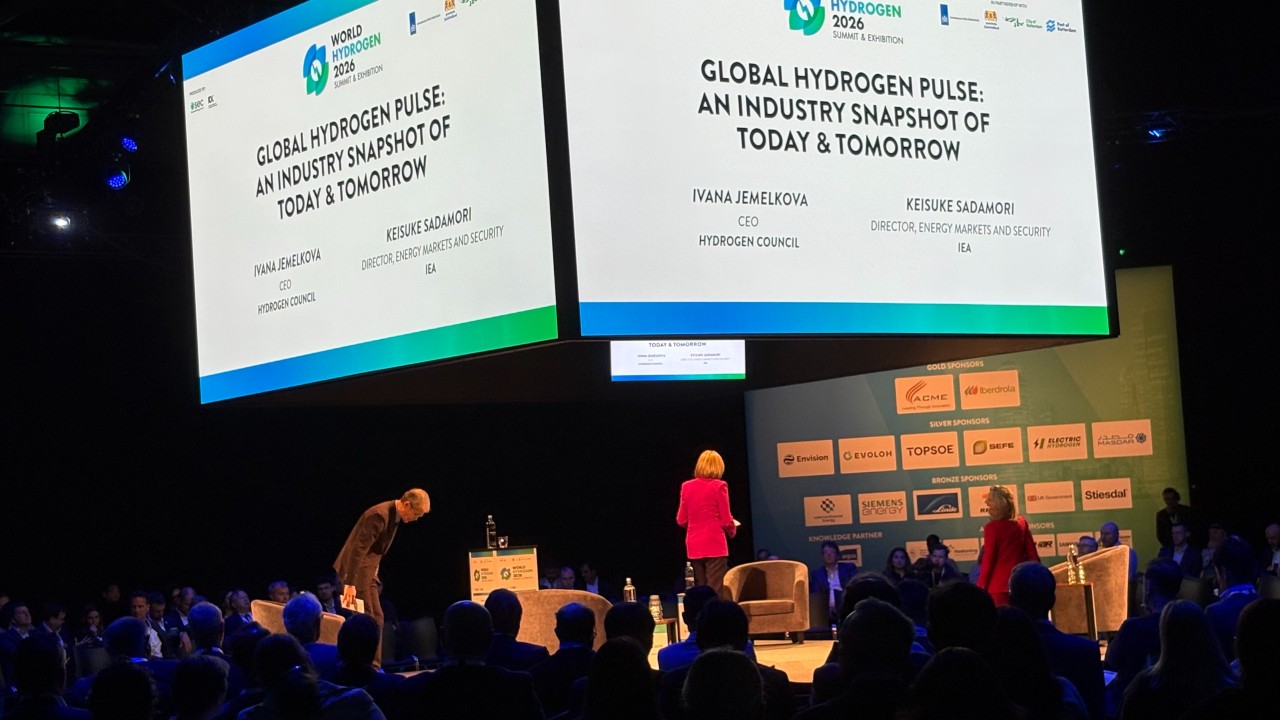
Another World Hydrogen Summit has wrapped up in Rotterdam and, for the BCM Public Relations team, it was one of the busiest, most insightful and most energising weeks we have experienced in the sector to date.
Supporting InterContinental Energy throughout the event gave us a front-row seat to the conversations shaping the future of the hydrogen industry. From ministerial discussions and investor meetings to panel sessions and media interviews, one thing became increasingly clear as the week unfolded:
The hydrogen conversation has changed.
There was a noticeably different tone compared to last year’s summit.
In 2025, much of the discussion still revolved around potential. There was significant focus on long-term ambition, policy announcements and whether hydrogen would ultimately scale in the way many hoped. While optimism remained high, the industry was also wrestling with delays, rising costs, regulatory uncertainty and growing scepticism in some corners of the market.
This year felt more grounded.
The conversations in Rotterdam were less about hypothetical futures and far more about execution, industrial competitiveness, infrastructure and energy security. The industry appears to be moving into a more mature phase, where the focus is increasingly on how projects are delivered, how systems connect together and how hydrogen fits into wider industrial and geopolitical strategies.
That shift was evident across almost every discussion we attended.
Throughout the summit, energy security emerged repeatedly as a defining theme. Ongoing disruption across global energy markets has reinforced concerns around sovereign fuel supply, industrial resilience and long-term competitiveness. Hydrogen is no longer being viewed solely through the lens of decarbonisation. Increasingly, governments and industry leaders are discussing it as part of a broader strategy for future energy independence and economic stability.
InterContinental Energy CEO Alexander Tancock spoke directly to this changing landscape during several discussions throughout the week, including the panel session “Hydrogen in a Volatile World: How Middle East Tensions Are Reshaping Markets from Europe to Asia”.
What stood out from that discussion was the degree to which the market narrative has evolved in real time. Only months ago, many conversations around hydrogen were still largely climate-driven. Today, governments and industrial groups are actively discussing diversification of fuel supply, strategic industrial capability and how large-scale hydrogen ecosystems can contribute to national resilience.
Alongside this geopolitical shift, another consistent theme throughout the summit was scale.
From developers and technology providers to policymakers and investors, there was widespread recognition that hydrogen will only become globally competitive if projects are developed at true industrial scale and supported by integrated infrastructure systems.
This aligns closely with InterContinental Energy’s long-standing approach to development. Rather than focusing on small standalone projects, the company has spent more than a decade developing large-scale industrial ecosystems designed to integrate renewable generation, hydrogen production, downstream industries and export capability through its modular P2(H2)Node™ architecture.
Interestingly, the wider market now appears to be converging around many of these same principles: repeatability, modularisation, infrastructure integration and long-term industrial planning.
The summit also highlighted just how international and interconnected the hydrogen economy is becoming. Discussions around future energy corridors between Australia, the Middle East, Europe and Asia featured prominently throughout the week, alongside growing recognition that collaboration between energy-rich regions and industrial demand centres will be critical to scaling the market.
For BCM Public Relations , one of the most rewarding parts of the week was seeing how much the hydrogen narrative itself has matured.
There is still plenty of realism in the sector. Challenges around regulation, permitting, infrastructure, financing and supply chains remain significant. Nobody attending the summit underestimated the scale of what still needs to be delivered.
But compared to previous years, there was far less focus on hype and far more emphasis on practical execution.
That feels important.
The industry is beginning to move beyond broad conceptual discussions and toward the more difficult but ultimately more meaningful work of building long-term industrial systems.
As communicators working closely within the energy transition space, it was fascinating to watch that evolution happen almost in real time over the course of the week.
Hydrogen still faces major hurdles, but Rotterdam 2026 felt like a summit where the industry became more disciplined, more pragmatic and more strategically focused.
And after a busy week of conversations, panels, interviews and meetings, that may be one of the most encouraging developments of all.