
Strategic Event Media Management: A B2B Leader’s Guide to Trade Show Authority
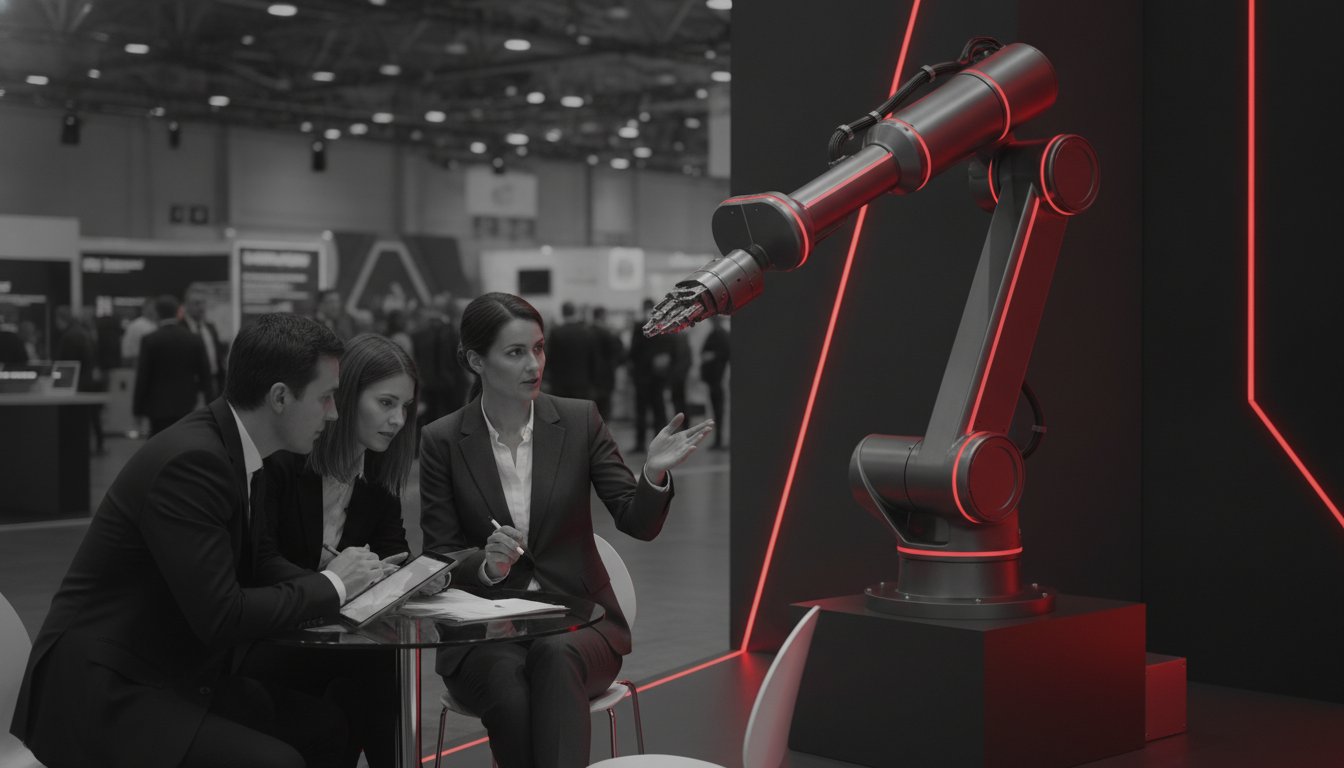
Whilst 93% of B2B event marketers are expanding their budgets in 2026, many industrial leaders still find themselves facing a silent return on investment once the exhibition floor closes. You've likely felt the frustration of a high-specification booth that attracts foot traffic but fails to engage the technical journalists who matter most. A truly effective B2B event PR strategy requires more than just a presence; it demands the methodical engineering of an environment that secures editorial interest amongst the noise of a crowded hall.
We understand that your executives need to be positioned as authoritative voices, not just booth staff. This guide provides a strategic roadmap to transform your exhibition presence into a high-impact media engine that secures tier-one editorial coverage and builds long-term industry authority. You'll discover a repeatable framework for global event success, from the precision of on-site media briefings to the synthesis of complex technical data into persuasive professional stories. By moving from high-level concepts to granular execution, we'll help you ensure that your next trade show serves as a catalyst for sustained market leadership.
Key Takeaways
- Implement a robust B2B event PR strategy that shifts focus from mere foot traffic to securing high-impact editorial coverage in tier-one trade journals.
- Master the two-phase architecture of event media management, ensuring seamless coordination between pre-show build-up and disciplined on-site execution.
- Optimise your digital press packs with professional video and photography to capture the attention of busy technical journalists in high-stakes exhibition environments.
- Establish a repeatable framework for navigating global trade shows by adapting your communication style to the specific media landscapes of the UK, Europe, and North America.
- Leverage the expertise of technical PR specialists to synthesise complex engineering concepts into persuasive narratives that resonate with influential industrial editors.
Table of Contents
- The Strategic Importance of Event Media Management in B2B
- The Architecture of a Media-Centric Event Strategy
- Tactical Media Engagement: Press Packs vs. Executive Briefings
- Navigating Global Trade Shows: A Framework for Success
- Partnering with Specialists for Maximum Event ROI
The Strategic Importance of Event Media Management in B2B
Event media management is the deliberate, proactive coordination of press engagement before, during, and after a trade show. Many industrial firms invest heavily in floor space but treat the media as an afterthought, assuming that a well-designed stand will naturally attract journalists. This passive approach often results in missed opportunities for high-level editorial coverage. The Strategic Importance of Event Media Management in B2B lies in its ability to transform a physical presence into a strategic communications asset that reaches far beyond the exhibition hall.
Traditional exhibition presence fails when it relies solely on foot traffic and spontaneous booth visits. Without a dedicated B2B event PR strategy, your technical innovations remain confined to the stand, invisible to the wider industry. The shift from passive "booth-waiting" to active editorial pursuit ensures that your message reaches decision-makers who couldn't attend the event in person. This approach is essential for building long-term thought leadership, as it positions your executives as the primary experts for emerging industry trends and technical solutions.
Beyond Logistics: The PR Perspective
Whilst stand design and high-end AV equipment are often the focus of event budgets, they remain secondary to the narrative presented to journalists. A visually striking stand might attract a passing glance, but it's the depth and relevance of the story that secures a feature in a leading trade journal. A specialised PR agency acts as the vital bridge between your technical engineers and the media. They translate intricate engineering data into compelling news stories that resonate with busy editors. Success in this context should be measured through clear KPIs, such as the number of pre-booked executive interviews and the quality of resulting editorial placements, rather than just the volume of generic lead scans.
The ROI of Earned Media at Trade Shows
Calculating the value of earned media involves comparing editorial placements to the cost of equivalent paid advertising. Editorial content carries significantly more weight with technical audiences because it offers third-party validation that an advert cannot replicate. A sophisticated B2B event PR strategy ensures that media coverage extends the lifespan of a three-day event, generating digital content that remains searchable and relevant for months. This creates a legacy of authority that continues to influence the sales cycle long after the stand has been dismantled. Event Media ROI is the ratio of editorial reach to total show spend.
The Architecture of a Media-Centric Event Strategy
A successful B2B event PR strategy operates as a structured chronological roadmap, beginning long before the first visitor enters the exhibition hall. To move beyond the logistical noise of stand builds and lead scanners, one must adopt a three-phase architecture that treats the media as a primary stakeholder rather than a secondary visitor. This systematic approach ensures that every interaction on the floor contributes to a larger editorial narrative that resonates with industrial decision-makers.
Phase 1 focuses on the pre-show build-up, where the objective is to create a "need to know" amongst influential editors. In the specialised engineering and manufacturing sectors, monthly trade journals often finalise their show previews six to eight weeks in advance. Pitching exclusives during this window is essential for securing prime placement. Phase 2 involves the disciplined execution of on-site media activities, whilst Phase 3 ensures post-show momentum by converting interviews into long-form feature articles.
Pre-Event: Securing the Editorial Calendar
Pitching technical exclusives six weeks prior to the event allows editors to plan their coverage around your innovation. A well-constructed media schedule respects the journalist’s limited time by offering structured, high-value opportunities rather than vague "drop-in" invitations. The key is developing a hook that clearly differentiates your technical solution from the myriad of incremental updates typically found at large-scale shows. This requires a deep understanding of current market challenges and a narrative that positions your brand as the definitive solution.
On-Site: The Media Briefing Room
Facilitating high-stakes executive interviews in a crowded exhibition centre requires a controlled environment. Whether through a private briefing room or a structured media breakfast, these sessions should provide journalists with direct access to your leadership team. It's vital to have technical experts on standby to handle deep-dive enquiries that go beyond the surface-level marketing message. Integrating Tactical Media Engagement: Press Packs vs. Executive Briefings ensures that journalists leave with both a compelling story and the necessary data to support it.
Synchronising social media activities with on-site events amplifies the reach of your message in real-time, creating a digital footprint that persists long after the event. This real-time amplification supports the transition into Phase 3, where the focus shifts to follow-ups and securing the long-tail editorial coverage that builds lasting authority. If you are looking to refine your approach for an upcoming international exhibition, you can discuss your requirements with our strategic specialists to ensure your technical innovations receive the visibility they deserve.
Tactical Media Engagement: Press Packs vs. Executive Briefings
Executing a high-calibre B2B event PR strategy requires a dual-track approach to communication. Whilst a comprehensive press pack provides the necessary technical evidence, the executive briefing delivers the strategic narrative that captures an editor's imagination. In the high-stakes environment of an industrial trade show, your ability to provide both frictionless data access and high-level visionary insights determines the quality of your editorial coverage. This tactical layer of engagement ensures that technical innovations are not just seen but are understood within the context of wider market shifts.
The distinction between a standard product pitch and a compelling industry narrative is critical. Journalists from specialised publications are rarely interested in a list of features; they seek to understand how your technology addresses systemic challenges within sectors like industrial automation or energy transition. To support this, professional video production and photography have become non-negotiable assets. High-resolution visual documentation allows editors to illustrate complex engineering concepts with clarity, significantly increasing the likelihood of your story securing a prominent feature or a cover position.
Designing the Modern Media Kit
A digital press pack for 2026 must be built for speed and technical depth. Gone are the days of physical USB sticks or bulky printed folders. Instead, utilise digital hubs and QR codes to provide frictionless access to essential components. Your media kit should include technical white papers, high-resolution imagery, and detailed data sheets that allow a journalist to verify claims instantly. Providing pre-written "story starters" or executive summaries helps busy editors identify the news value within your technical data, allowing them to draft accurate copy whilst the event is still in progress.
Executive Readiness and Media Training
Preparing your leadership team for technical media interactions is as vital as the technology you're exhibiting. Even the most brilliant engineers can struggle to bridge the gap between complex jargon and compelling headlines. Specialised media training ensures that your spokespeople maintain message discipline, even during high-pressure live interviews. This training is particularly valuable when handling challenging enquiries from industry analysts on the stand. By focusing on the industry narrative rather than just the product, your executives can navigate difficult questions whilst reinforcing your brand's position as a worldly, experienced authority in the global professional landscape.
Navigating Global Trade Shows: A Framework for Success
Global trade shows serve as the ultimate proving ground for international brand expansion. For industrial leaders, a B2B event PR strategy must be robust enough to handle the nuances of different geographic regions whilst maintaining a cohesive global narrative. Whether you are exhibiting at a major European hub like Hannover Messe or a North American powerhouse like IMTS, the expectations of the technical press vary significantly. European journalists often demand granular technical data and evidence of regulatory compliance, whilst North American media may focus more on market disruption and the broader business implications of your technology.
Success on the global stage requires more than just translating press releases. It involves the careful localisation of technical concepts to ensure they resonate with the specific linguistic and professional standards of the target region. In the engineering and manufacturing sectors, international trade journals remain the gold standard for brand positioning. Securing coverage in these publications builds a foundation of credibility that supports long-term growth in new territories. Managing multi-lingual press releases and interview opportunities requires a level of precision that ensures your core message isn't lost in translation.
Sector-Specific Media Nuances
Media management requirements shift dramatically between different industrial verticals. In the automation sector, the focus is often on interoperability and efficiency gains within smart factories. Conversely, oil & gas events frequently centre on safety, sustainability, and large-scale infrastructure resilience. Engaging with niche influencers in these fields requires a different approach compared to traditional trade editors. These digital voices often prioritise real-world applications and peer-to-peer validation. Addressing regional regulatory topics, such as specific EU environmental directives or US safety standards, is a highly effective way to gain traction in local media outlets that are looking for relevant, actionable news.
Coordinating International Press Offices
Managing a multi-lingual media presence requires seamless coordination with show organisers to maximise official opportunities. Most large-scale international exhibitions offer dedicated press offices and media slots that can be leveraged to increase visibility. By utilising a global network for local media outreach, you can ensure that your brand messaging remains consistent whilst being delivered by experts who understand the local landscape. This coordinated effort prevents the fragmentation of your professional story and ensures that your technical innovations are presented with authority on every international platform.
If you're planning an international exhibition programme for 2026, it's essential to have a partner who understands these regional complexities. You can contact our team of strategic specialists to begin developing a global media framework that delivers measurable results.
Partnering with Specialists for Maximum Event ROI
Selecting the right partner to execute a B2B event PR strategy is often the deciding factor between a quiet exhibition stand and a high-impact media engine. Generalist event agencies frequently excel at logistical coordination, managing stand builds and floor plans with efficiency. However, they typically lack the technical depth required to manage media relations within specialised industrial sectors. A generalist firm cannot bridge the gap between complex engineering concepts and the rigorous editorial standards of tier-one trade journals. This requires a level of domain expertise that only a dedicated specialist can provide.
The value of partnering with BCM Public Relations lies in our 30-year tenure of building relationships with industrial trade editors. These are not merely contacts; they are long-standing professional partnerships based on mutual respect for technical accuracy. When we pitch a story, editors know it will be backed by the technical rigour their readers expect. This credibility is essential for securing feature coverage in sectors such as automation and engineering. Integrating this event support with a broader technical content marketing strategy ensures that the insights gathered on the show floor continue to drive lead generation long after the event concludes.
The BCM Advantage: Technical Rigour Meets PR Strategy
Our approach is defined by the ability to synthesise intricate engineering data into persuasive professional stories. We don't just facilitate interviews; we ensure your executives are prepared to lead the industry conversation through specialised media training. This comprehensive suite of services, from initial media outreach to post-event reporting, is designed to maximise the return on your exhibition investment. We have a proven track record of securing editorial placements at global exhibitions, ensuring that your technical innovations receive the visibility they deserve amongst a global audience of decision-makers.
Getting Started: Your Event Media Audit
The first step towards transforming your exhibition presence is a comprehensive audit of your 2026 exhibition calendar. We identify the most impactful media opportunities within your schedule, ensuring that your resources are focused on events with the highest potential for editorial reach. By developing a bespoke event media management plan, we move from high-level strategic concepts to granular execution with professional grace. This methodical planning ensures that every show in your calendar contributes to your long-term industry authority. To begin refining your approach and securing your place as a technical thought leader, contact BCM Public Relations to elevate your exhibition strategy.
Driving Long-Term Authority through Strategic Media Management
Transforming a trade show presence from a logistical exercise into a high-impact media engine is a strategic necessity for industrial leaders. Success depends on moving beyond passive booth-waiting and instead implementing a disciplined B2B event PR strategy that prioritises executive thought leadership and technical storytelling. By synchronising pre-show build-up with on-site media briefings and global localisation, you ensure that your innovations resonate with the editors who shape industry perception across the global landscape.
BCM Public Relations brings over 30 years of B2B industrial PR expertise to your exhibition calendar. Operating from our London-based strategic centre with a vast global reach, we specialise in translating complex engineering, manufacturing, and technology concepts into compelling editorial narratives. We provide the technical rigour and media training required to secure tier-one placements and build lasting industry authority that persists long after the exhibition floor closes.
Maximise your exhibition ROI with BCM’s expert event support. We look forward to helping you command the spotlight and secure a definitive competitive advantage at your next international event.
Frequently Asked Questions
What is event media management in a B2B context?
Event media management is the strategic coordination of all press interactions before, during, and after an exhibition to ensure maximum editorial visibility. In a B2B context, it involves synthesising technical data into professional stories that resonate with industrial trade editors. This proactive approach moves beyond simply hosting a stand, focusing instead on engineering a controlled environment where technical journalists can access high-value insights and executive interviews.
How early should we start planning media activities for a trade show?
You should ideally begin planning your media activities at least three to four months before the event to align with long-lead editorial calendars. Most technical trade publications finalise their exhibition preview issues six to eight weeks in advance. Securing these placements requires a robust B2B event PR strategy that identifies key announcements early, allowing sufficient time for technical copywriting and the creation of high-quality visual assets.
Is it worth having a press conference at a technical exhibition?
A press conference is only effective if you have a significant, industry-first technical innovation or a major strategic announcement to share. Busy journalists often prefer one-on-one executive briefings that allow for a deep dive into specific engineering data. If your news is truly ground-breaking, a well-organised press breakfast or briefing can be a highly efficient way to engage multiple tier-one editors simultaneously in a structured environment.
How do we attract technical journalists to our stand?
Attracting technical journalists requires a proactive outreach programme that begins several weeks before the exhibition doors open. Rather than waiting for spontaneous visits, you should pitch exclusive story angles and pre-book specific interview slots with key editors. Offering direct access to your lead engineers or senior executives provides the high-value technical insight that journalists need to justify their time away from the press office.
What should be included in a digital press kit for a 2026 event?
A modern digital press kit must include technical white papers, high-resolution photography, and detailed product data sheets accessible via frictionless QR codes. It's essential to provide pre-written executive summaries and "story starters" that help editors quickly identify the news value of your technical innovations. Including high-quality video content is also non-negotiable for 2026, as it significantly increases the likelihood of your story being featured across digital trade platforms.
Can event media management help with lead generation?
Yes, effective media management directly supports lead generation by building the third-party credibility that technical decision-makers require. Whilst booth scans provide raw data, editorial placements in respected trade journals act as a powerful endorsement of your technical authority. This earned media presence often serves as the initial touchpoint in complex B2B sales cycles, pre-qualifying prospects and establishing trust before they even reach your sales team.
How do we measure the success of our event media strategy?
Success should be measured by the quality and reach of editorial placements rather than just the volume of press releases distributed. Key performance indicators include the number of pre-booked interviews with tier-one editors, the depth of technical coverage achieved, and the long-term search visibility of resulting articles. A successful B2B event PR strategy delivers measurable ROI by comparing the value of earned editorial space against equivalent paid advertising costs.
Do we need a PR agency if the show organiser has a press office?
Whilst show organisers provide basic facilities, they cannot offer the bespoke media outreach or technical storytelling required to differentiate your brand. A specialist PR agency acts as your dedicated advocate, navigating the competitive media landscape to secure exclusive opportunities that the general press office cannot facilitate. We provide the strategic specialist knowledge and established editor relationships necessary to ensure your technical message isn't lost amongst hundreds of other exhibitors.